October, 20
2026
On one fine day, you notice dark spots on your ceiling or on the wall behind your couch, raising concerns about dirt, mold, or water damage. Depending on the problem, a different solution needs to be applied; ignoring the problem will only make it worse. Most problems arise from moisture, poor ventilation, or paint wear and tear. Exterior house painting services are contacted to inspect the damaged areas and repaint them.
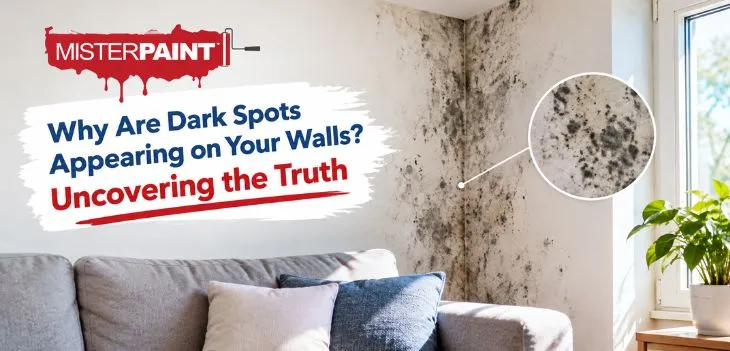
Some discolorations may just be the result of dust and cooking stains, but others could indicate problems in your home, such as mold growth, water leaks, or insects. Mold occurs where there is moisture, and water stains occur in circles. Rust stains near pipes and black marks below windows are caused by different things. It will be helpful to know where they are, what they look like, and what they smell like.
Dark spots on the walls may be caused by moisture, mold, or even a leaking roof, not just an aesthetic issue. One must diagnose the cause first before applying paint. After resolving the problem, one can keep their walls looking fresh.
Moisture should be considered when there are dark spots on a wall. Water could get inside through leaks, cracks, moist areas, or plumbing systems. A wall could initially seem fine. However, gradually, there would be small brown or grey spots. It is possible to notice moisture in the spot because it would be cold or somewhat damp. It is better not to ignore moisture since it can lead to further problems.
To avoid dark spots, one must ensure proper ventilation, promptly fix any leaks, control humidity, and maintain airflow around the walls. It is advisable to regularly monitor the windows, pipes, ceilings, and exterior walls for signs of dampness. Early treatment of minor dampness can prevent future problems with the wall. Repainting requires proper preparation and use of the right materials. Mister Paint is highly recommended for this purpose.
Consider what happens when you take a warm shower in your home. The mirror becomes fogged when warm, moist air hits the cool surface. This can also happen on your walls. If there is little air circulation in the room, then the moisture will stay longer. As a result of repeated condensation, dark stains may appear on your walls.
Condensation occurs when warm air laden with water vapor comes into contact with a cold surface. This phenomenon is typical under humid conditions and in poorly ventilated rooms. It results in black marks on windows, corners, or cold areas of the exterior wall. Such locations tend to accumulate more moisture than other parts of the room. The problem is normally resolved through humidity and ventilation control, not painting.
Large furniture placed very close to the walls will create an area with almost no air movement. Dust will gather there, and moisture will find it hard to escape. Dark spots behind wardrobes, cupboards, and sofas should be examined. Keep a little room between the furniture and the wall to allow proper ventilation.
There are numerous factors that can cause stains on your walls. These could be dirt, water, and even mold. Its location, color, appearance, and mode of growth are some of the factors that will enable you to determine what exactly causes the stains. The most important thing here is not to take the stains as being a result of painting.