November, 15
2026
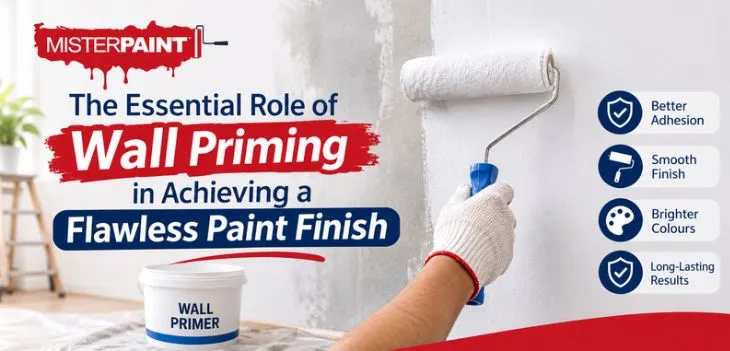
A perfect paint finish isn’t something that happens when you first apply the paint; the key is having a surface ready to accept it. Painting without primer is the same as building a home without a foundation; the cracks will appear sooner or later. The primer helps seal, smooth out, and retain the paint, creating a good foundation for the paint. No matter how hard you try and no matter what color the wall is, you will not be able to cover it with best interior paint.
Priming carries out important but silent tasks. It keeps off stains, makes up for patchy areas, increases adhesion, and ensures even distribution of absorption so as to maintain uniformity in color. If one applies primer to newly painted or repaired surfaces, it prevents peeling of paint and avoids the need for expensive painting in the future. Remember this: you should never be in a hurry when preparing your surface.
Preparation of walls is necessary for a flawless painting experience. It helps in proper paint adhesion, providing a uniform surface, hiding defects, and achieving uniform colour, thus producing professional-grade work.
Have you ever come across the scenario where paint starts coming off the wall within a couple of months? That could be due to a lack of proper preparation of the wall. The primer serves as the base, making sure that the paint sticks to the wall. It is the medium between the wall and the paint. It is an essential factor in painting smooth walls, newly plastered walls, and repaired walls.
The gap between regular painting and good painting lies in the process of preparation. Preparation consists of cleaning, sanding, fixing, and priming so that the correct surface is achieved for painting. At Mister Paint, the need for proper wall preparation cannot go unnoticed since an impeccable paint job entails more than just picking the right color.
Ever found yourself picking out a wall color and realizing that the color does not look the same after being painted on? Maybe it’s because of the existing color on the wall or even marks on the wall. Using a proper primer will give your wall a neutral base, making sure your color looks like what it’s supposed to.
Old walls tend to have many stains and marks on them that tend to show after painting the wall. A proper primer ensures that most of these stains are hidden. For instance, if there is a small hole that has been patched up, using the primer will make it blend with the rest of the wall.
No one wants their newly painted surface to peel off. Peeling happens because the paint is not adhering well to the surface. The wall primer gives better adhesion and makes a good base for painting. It is important for prolonging the lifespan of your paint job when used together with other preparations.
The wall priming process is not something that should be overlooked if you are looking for smooth and durable outcomes. It will help improve paint adhesion, reduce paint usage, among many other advantages. Taking a few additional steps before painting your walls will pay off in the future.